

Choosing the right marketing strategy can feel overwhelming when every channel promises results. The truth is, there is no universal playbook. The best strategy depends on your goals, audience, budget, and capacity to execute. In 2026, marketing has shifted from a set of channels to an infrastructure that needs to work as a system. This guide walks you through a clear, repeatable process for selecting marketing strategies that actually drive growth, whether you are a startup or an established business owner looking to scale.
1. Define Your Business Goals First
A marketing strategy is a structured plan that aligns promotional activities with specific business objectives. Before you pick any channel or tactic, you need to know exactly what you want to achieve. Are you focused on lead generation, brand awareness, customer retention, or direct sales?
Setting clear goals prevents the most common mistake businesses make: spreading resources too thin across every available platform. According to Monday.com's 2026 marketing guide, you should track measurable goals tied directly to revenue, not vanity metrics like followers or likes.
Use the SMART Framework
Each goal should be Specific, Measurable, Achievable, Relevant, and Time-bound. For example, "Increase qualified leads by 25% over the next quarter through paid search" is far more useful than "get more traffic."
Tie Goals to Funnel Stages
Your marketing funnel has three core stages: awareness, consideration, and conversion. Map each goal to a stage so you can choose channels that serve the right purpose. This ensures every dollar has a clear job to do.
2. Know Your Target Audience Inside and Out
A target audience is the specific group of consumers most likely to buy your product or service. Without knowing who your ideal customer is, it is impossible to create messaging that resonates. Start by documenting demographics, pain points, buying behavior, and preferred platforms.
At Infinity Media, every client engagement begins with an extensive onboarding process designed to understand your product, value proposition, competition, and brand. This research-first approach is what separates strategies that convert from those that waste budget.
Build Data-Driven Personas
Go beyond guesswork. Use tools like Google Analytics, CRM data, and customer interviews to build personas grounded in real behavior. A SaaS startup identifying its first paying users needs a very different persona than a local service business.
3. Evaluate Marketing Channels by Fit
Not every channel is right for every business. The three most-used marketing channels for small businesses in 2026 are unpaid social media (66%), social media ads (56%), and SEO combined with email marketing (53%), according to industry data compiled on Medium.
Think of channels as playing different positions on a team. Some excel at building awareness, others capture intent, and still others nurture consideration. The best strategies use channels that cover all three functions.
Organic Channels
SEO is the process of optimizing your website to rank higher in search engine results, increasing visibility, and driving organic traffic. Content marketing and social media build long-term brand equity. These are lower-cost but require patience and consistency. Startups looking for guidance can explore proven startup marketing tactics to get started.
Paid Channels
PPC advertising is a paid digital marketing strategy that involves bidding on keywords to display ads in search results. Paid social media ads on platforms like Facebook and Instagram let you target specific audience segments with precision. These channels deliver faster results but require careful budget management.
Owned Channels
Email marketing remains one of the highest-ROI channels available. Your email list is an asset you own, free from algorithm changes. Pair it with SMS for an even more direct communication path.
4. Align Your Budget and Resources
A 2026 MarketingProfs survey found that 68% of small business owners expect their marketing budgets to increase this year, and 54% already use AI marketing tools. Budget is only half the equation; you also need the team capacity to execute.
If your internal resources are limited, partnering with a specialized agency can be far more cost-effective than hiring in-house. Infinity Media's service packages start at $500 per month and provide a full team of senior digital marketing specialists for a fraction of a single in-house salary.
5. Marketing Channel Comparison Table
| Channel | Best For | Time to Results | Relative Cost | Difficulty |
|---|---|---|---|---|
| SEO / Content Marketing | Long-term organic traffic | 3-6 months | Low-Medium | Medium |
| Google Ads (PPC) | Capturing high-intent searches | Days | Medium-High | Medium |
| Facebook / Instagram Ads | Awareness and retargeting | Days-Weeks | Medium | Medium |
| Email Marketing | Nurturing leads and retention | Weeks | Low | Low |
| Influencer Marketing | Brand credibility and reach | Weeks | Medium-High | High |
| Social Media (Organic) | Community building | Months | Low | Medium |
Use this table as a starting point. The ideal mix depends on your goals and audience, not on what is trending.
6. Build a Marketing System, Not Just Tactics
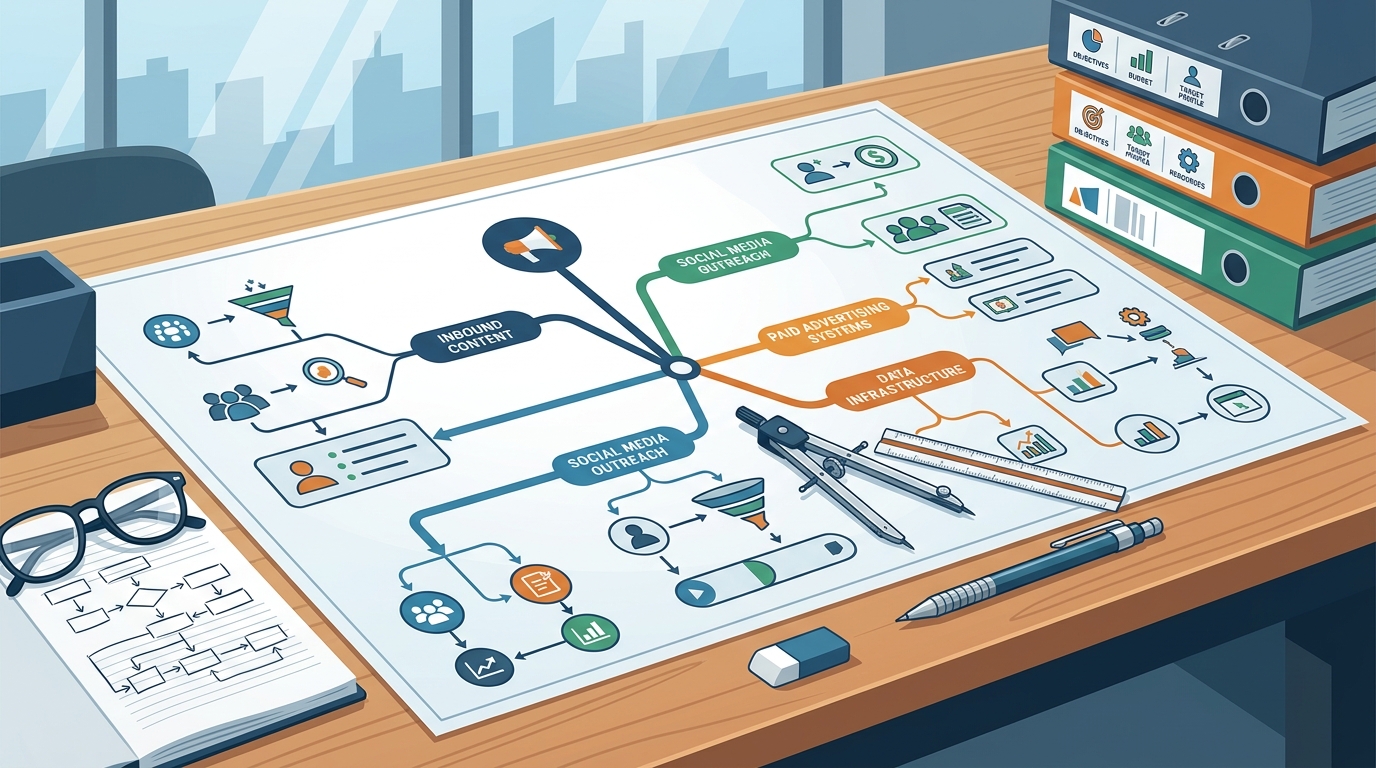
Random tactics executed inconsistently will not produce sustainable growth. A marketing system is an interconnected structure that attracts the right customers, earns their trust, converts them into buyers, and turns them into advocates.
Infinity Media's approach reflects this philosophy. Their process starts with deep research into your business, followed by a comprehensive media plan covering strategy, audience segments, targeting, ad copy, and creatives. Weekly reporting tracks KPIs across the entire funnel, not just at the ad level.
Measure, Learn, Iterate
Track conversion rates, customer acquisition costs, and lifetime value. Use A/B testing to optimize everything from ad creatives to landing pages. Infinity Media has run thousands of A/B tests across clients, and the lesson is clear: continuous optimization beats one-time campaign launches every time.
Real Results Matter
When Infinity Media partnered with Copysmith, the AI copywriting startup was struggling with a CPA exceeding $17 per signup. After restructuring campaigns and landing pages, performance improved dramatically. Explore more outcomes on the Infinity Media case studies page.
Key Takeaways
- Start with clearly defined business goals before selecting any marketing channel.
- Build detailed audience personas using real data, not assumptions.
- Match channels to funnel stages: awareness, consideration, and conversion.
- Focus on 3-5 high-impact channels rather than trying to be everywhere.
- Align your budget with your capacity to execute consistently.
- Treat marketing as an integrated system, not a collection of disconnected tactics.
- Measure results weekly and optimize based on data, not gut instinct.
Frequently Asked Questions
What is a marketing strategy?
A marketing strategy is a long-term plan that outlines how a business will reach its target audience and achieve its commercial objectives. It includes channel selection, messaging, budget allocation, and performance metrics.
How much should a small business spend on marketing?
Most small businesses allocate 5-10% of revenue to marketing. The right amount depends on your growth stage. Startups often need to invest more aggressively, while established businesses can focus on optimization and retention.
Which marketing channel has the highest ROI?
Email marketing and SEO consistently rank among the highest-ROI channels because they build owned assets over time. Paid search delivers fast results for high-intent queries. The best approach combines multiple channels.
How long does it take to see marketing results?
Paid channels like Google Ads can generate leads within days. Organic strategies like SEO and content marketing typically take 3-6 months to show meaningful traction. Consistency is critical regardless of the channel.
Should I hire an agency or do marketing in-house?
If you lack the internal expertise or bandwidth, an agency partnership is often more cost-effective. Infinity Media offers packages that provide a full team of senior specialists starting at $500 per month, far less than one in-house hire.
What is the biggest marketing mistake small businesses make?
Spreading resources too thin across too many channels. It is better to master 3-5 channels than to maintain a weak presence on ten platforms simultaneously.
How do I know if my marketing strategy is working?
Track KPIs tied to revenue: conversion rate, cost per acquisition, customer lifetime value, and monthly sales. Vanity metrics like impressions or follower counts can be misleading without revenue context.
Can AI tools help me choose a marketing strategy?
Yes. AI tools can analyze customer data, generate content drafts, automate email sequences, and optimize ad targeting. In 2026, 54% of small business owners already use AI marketing tools, with another 27% planning to adopt them this year.
Get Expert Help Choosing Your Strategy
Choosing the right marketing strategy does not have to be a guessing game. Infinity Media partners with startups and growth-stage businesses to build data-driven marketing systems that deliver measurable results. From paid media to conversion rate optimization, every strategy is tailored to your unique goals and audience.
Book a free consultation with Infinity Media to discuss your marketing goals and find the right strategy for your business.